
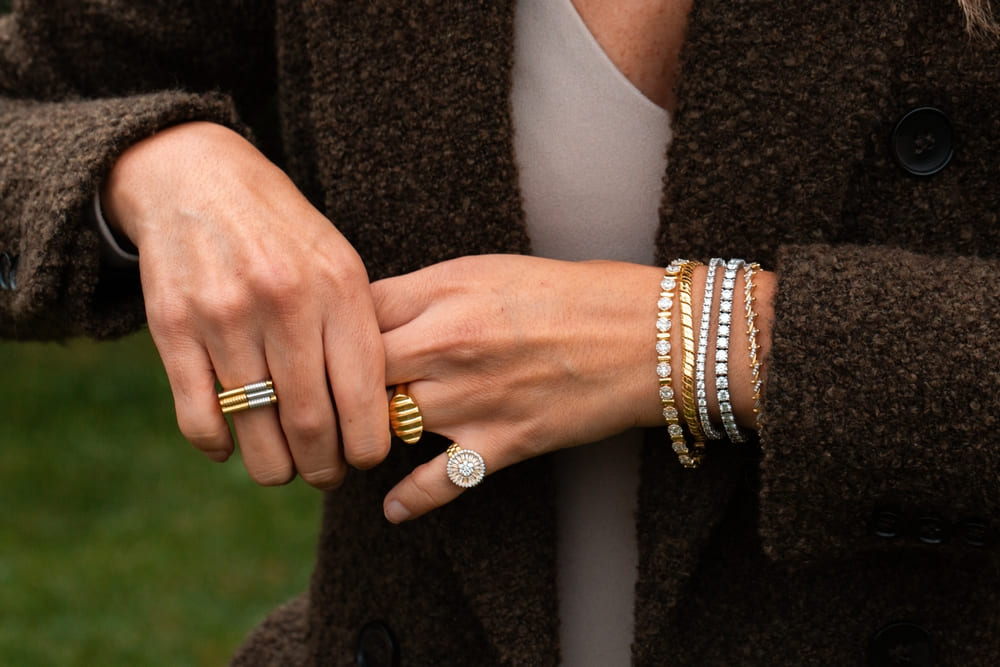
Layered accessories have moved from trend to everyday essential. Rings stack across fingers, necklaces fall in tiers, and bracelets mingle in artful combinations of shine and structure. When done well, the result of jewelry layering looks effortless, expressive, and highly personal.
If you’ve ever wanted to master the art of jewelry layering, you’re in the right place. With a few stylist techniques, anyone can mix metals, play with textures, and create combinations that feel curated rather than crowded. And if you are specifically searching for a jewelry layering how to guide, the principles below will detail everything you need to know.
This guide breaks down the fundamentals, the styling logic behind them, and practical steps you can use immediately.
Why Jewelry Layering Works
Jewelry layering works because it creates depth and movement. Multiple pieces catch the light differently, highlight various parts of the outfit, and guide the eye. A single chain can be elegant, but several together tell more of a story.
Another reason is versatility. You can transform basics you already own into something new just by changing how they are combined. Understanding jewelry layering – how to use proportion, contrast, and spacing – opens up many more outfit possibilities without buying a whole new collection.
Start With a Visual Anchor
Stylists rarely pile everything on at once. They begin with a focal point, then build around it.
Your anchor might be a pendant with meaning, a chunky chain, a statement cuff, or a watch. Once that piece is in place, the rest should support it rather than compete with it.
When building a jewelry layering look, choosing an anchor is often the first decision that makes the rest easier. If every item tries to be the star, the overall result loses clarity.
Mixing Metals the Modern Way
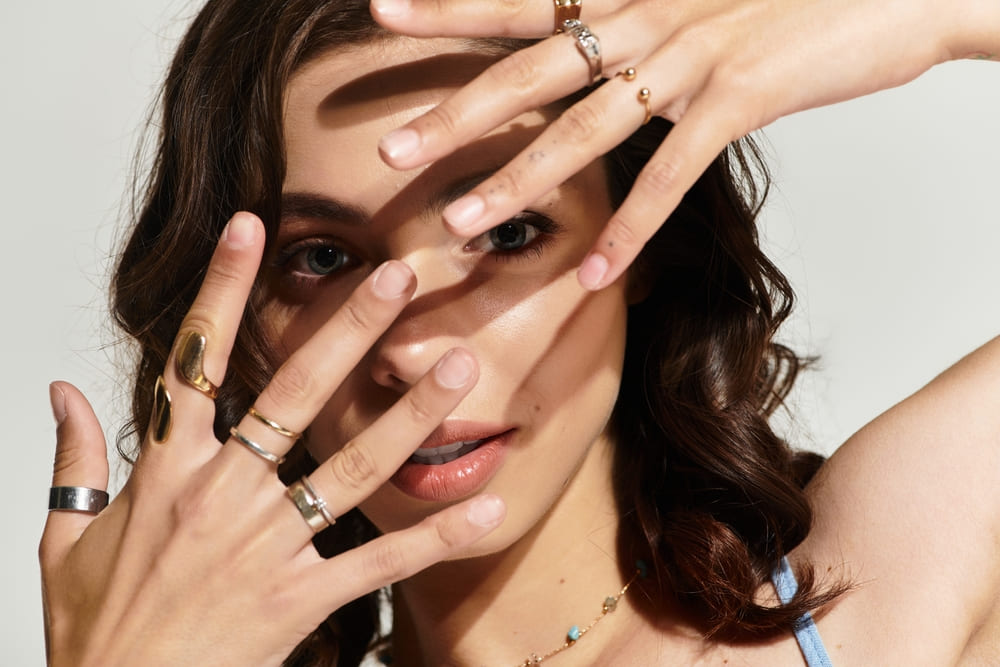
Old style rules suggested choosing either gold or silver. Modern styling treats that idea as outdated. Mixing metals adds dimension and makes your layers feel intentional.
The easiest approach is repetition. If you wear a silver necklace, echo that silver somewhere else, perhaps in a ring or earring. The same goes for gold or rose tones. Repeating each metal at least once creates cohesion.
You can also use a bridging piece. Many designs combine multiple finishes in one item. That piece visually ties everything together and makes the blend look natural.
If you are new to jewelry layering, how to mix metals without overthinking can seem daunting. Begin with two tones and expand once you feel confident.
Combine Different Textures
Texture is what separates a beginner stack from a stylist level composition. Smooth snake chains next to paperclip links, hammered rings beside polished bands, or leather paired with metal all create contrast.
Think about how fabrics work in clothing. A knit sweater feels richer with denim or silk than with another identical knit. Jewelry behaves the same way.
Try pairing delicate shine with something matte or organic. Add a beaded bracelet between metal bangles. Place a pendant on a fine chain next to a heavier link. These shifts keep the eye engaged and elevate your jewelry layering approach.
Vary Lengths for Necklace Layers
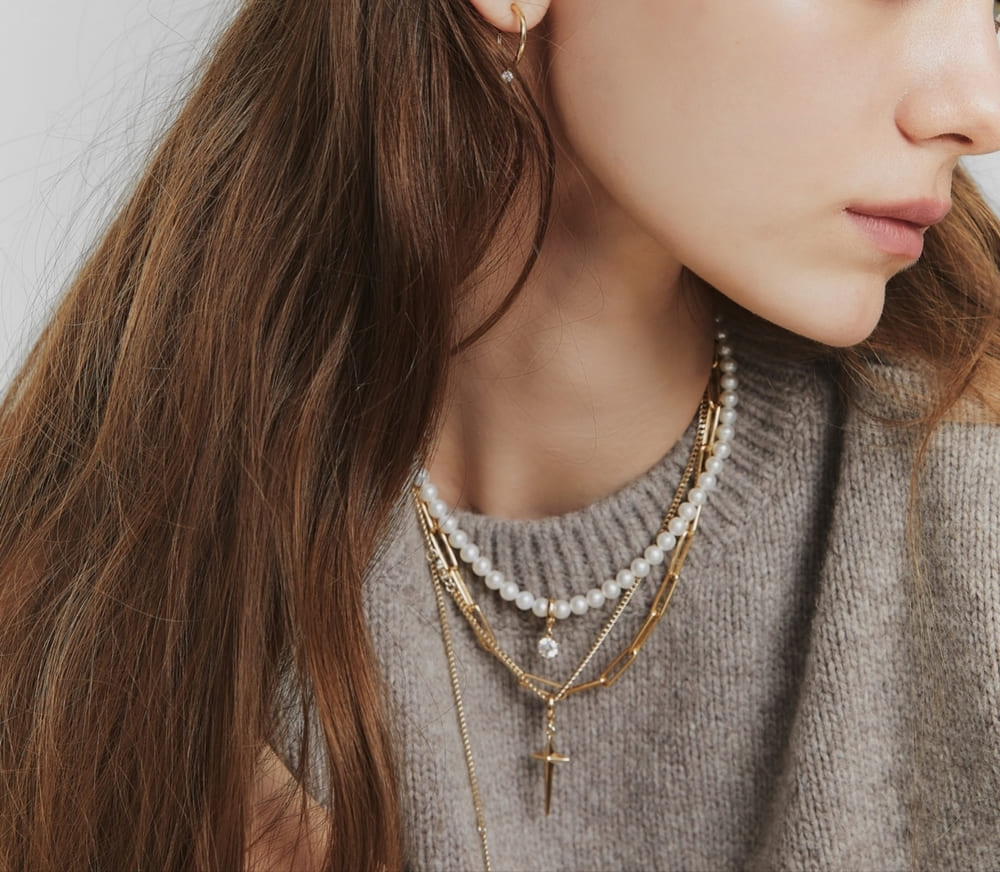
Necklace layering is often where people experiment first. The most important principle is separation. If chains sit at the same spot, they tangle visually and physically.
Aim for at least a small difference in drop between each piece. A choker, a mid-length pendant, and a longer chain create a natural cascade. Each necklace should occupy its own level.
Also consider necklines when it comes to your fashion choices. Higher necklines highlight longer layers, while open collars allow chokers and short pendants to shine.
Balance Scale and Weight
If everything is dainty, the look may disappear. If everything is oversized, it may overwhelm. Balance is the sweet spot.
Pair bold with subtle. A thick chain can be flanked by finer strands. A large cocktail ring can sit beside slim stackers. This variation creates rhythm and keeps your jewelry layering visually interesting.
For those learning jewelry layering, how to control scale is important. A helpful trick is the rule of contrast. Include at least one piece that is noticeably different in width or presence from the others.
Stacking Rings With Intention
Ring stacking lets you be playful but still benefits from structure. Start with one finger as the feature, then keep others lighter.
Mix heights as well as finishes. A low-profile band next to a raised setting adds interest. Leave small gaps on some fingers so the stack has room to breathe.
Spread similar metals across the hand to maintain harmony. Even when styles differ, repeating tones keeps the arrangement unified within your overall jewelry layering strategy.
Layer Bracelets and Watches Together
Your wrist is prime real estate for jewelry layering. Combining a watch with bracelets looks contemporary and relaxed.
Place slimmer pieces closest to the hand and bulkier ones slightly higher on the arm. This prevents crowding and keeps movement comfortable.
Soft materials such as cords or beads can break up a lineup of metal. They also help create a casual mood that balances more polished elements.
Leave Space
One of the most overlooked parts of jewelry layering how-to is knowing when to stop. Negative space is powerful. Bare skin between pieces allows each item to stand out.
You do not need something on every finger or five chains at all times. Sometimes two or three thoughtfully chosen layers create more impact than a full collection.
Take a step back in the mirror. If your eye cannot find a place to rest, remove one piece.
Match the Mood of the Outfit
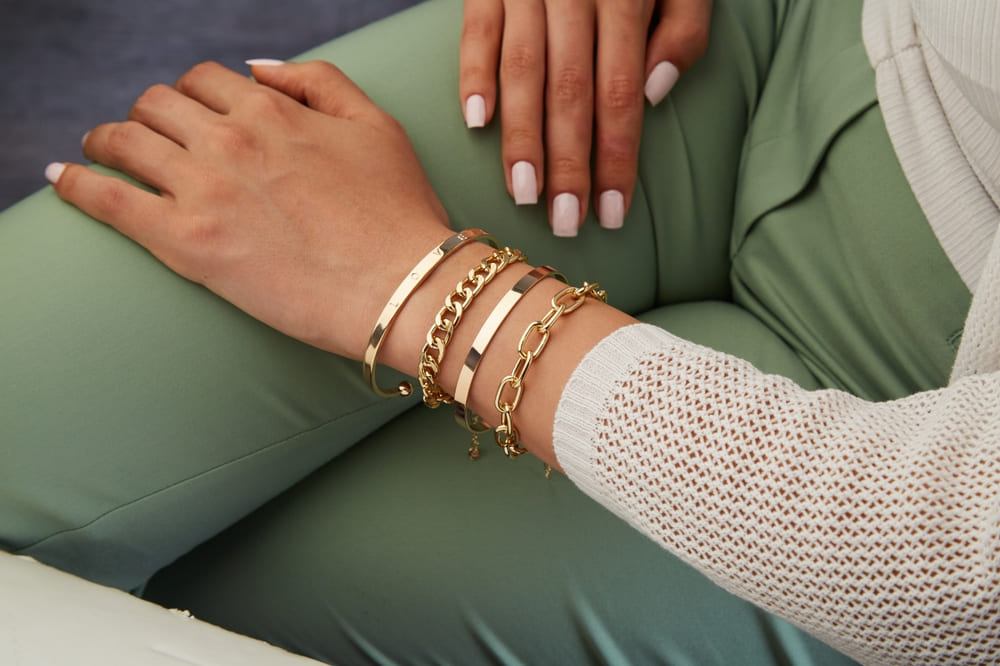
Jewelry layering should complement clothing, not fight it. Sleek tailoring pairs beautifully with structured metals. Flowy silhouettes often work well with mixed textures and longer lines.
Color matters too. Warm outfits can enhance gold tones, while cooler palettes often highlight silver. Personal preference should always lead.
As you practice jewelry layering, you will begin to sense what feels balanced and authentic to you.
Create Signature Formulas
Stylists often rely on repeatable combinations. Maybe you love a choker plus two pendants, or a watch with three varied bracelets. Having a formula speeds up dressing and builds a recognizable aesthetic.
You can always swap individual pieces while keeping the structure. This keeps your jewelry layering consistent but never boring.
Care and Practical Considerations
Layered pieces can tangle or rub together. Choose sturdy clasps and check spacing during the day. Remove delicate items before activities that might snag them.
Storing necklaces separately and fastening them before putting them away helps maintain their shape and finish.
Jewelry Layering: Confidence is the Final Layer
Technique matters, but attitude completes the look. Jewelry is a form of self-expression. Some would say that self-expression is a form of self-care. If a combination makes you feel good, it will read as intentional.
Mastering jewelry layering and understanding how to mix metals and textures takes experimentation. Try new pairings, take photos, and notice which arrangements you return to again and again.
With time, the process becomes intuitive. You will reach for pieces, combine them quickly, and walk out the door looking like you had a stylist on call. And in a way, you did. You just learned to think like one.







Leave A Comment