
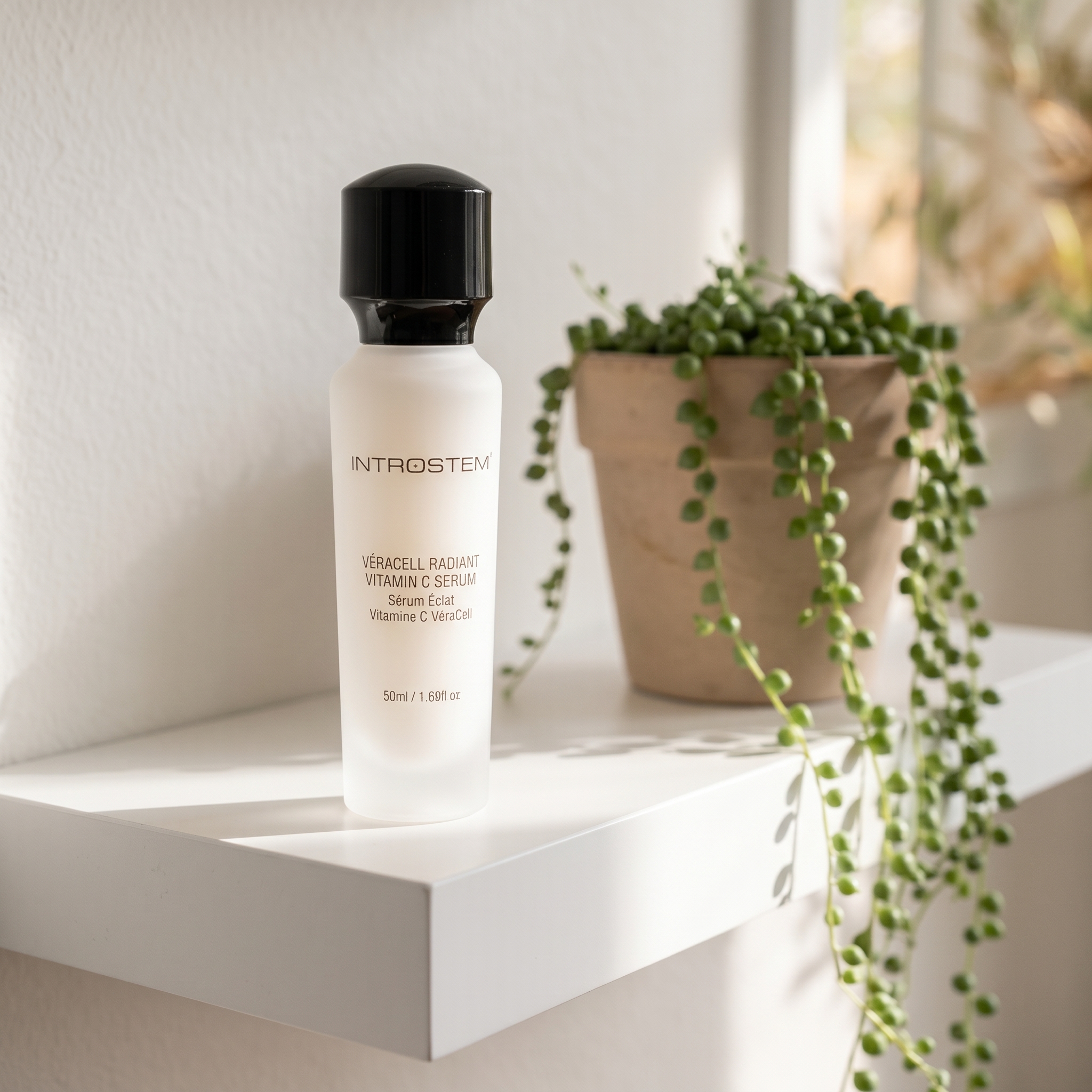
Six weeks ago, I changed exactly one thing in my skincare routine. Not the cleanser. Not the moisturizer. Just one serum. Today, the shadowy spots around my eyes look barely there, and my skin has a natural glow it didn’t have before. I have no other changes to credit.
So what’s in that bottle? In this Introstem vitamin C serum review, I’m breaking down the formula ingredient by ingredient. I’ll also cover what vitamin C is meant to do for your skin and how six weeks of daily use of this serum looked and felt. Fair warning: the texture alone had me at hello.
First, Who is Introstem?
Before this Introstem vitamin C serum review goes any further, a quick intro to the brand.
Introstem is a skincare line built around one hero ingredient: grape stem cell extract. It pairs that star with botanicals, antioxidants, and humectants (the moisture-magnet ingredients that keep skin feeling bouncy). The formulas are not tested on animals, either.
I also like how the brand thinks about skin. Its philosophy rests on three things: genetics, environment, and behavior. Translation: some of what you see in the mirror is inherited, some comes from sun and air quality, and some comes from daily habits. Introstem says outright that skincare can’t change your DNA, but the right products can help minimize the look of certain concerns. That honesty is refreshing in an industry that loves a miracle claim. You can read more on their About page.
Why Are Vitamin C Serums So Hyped?
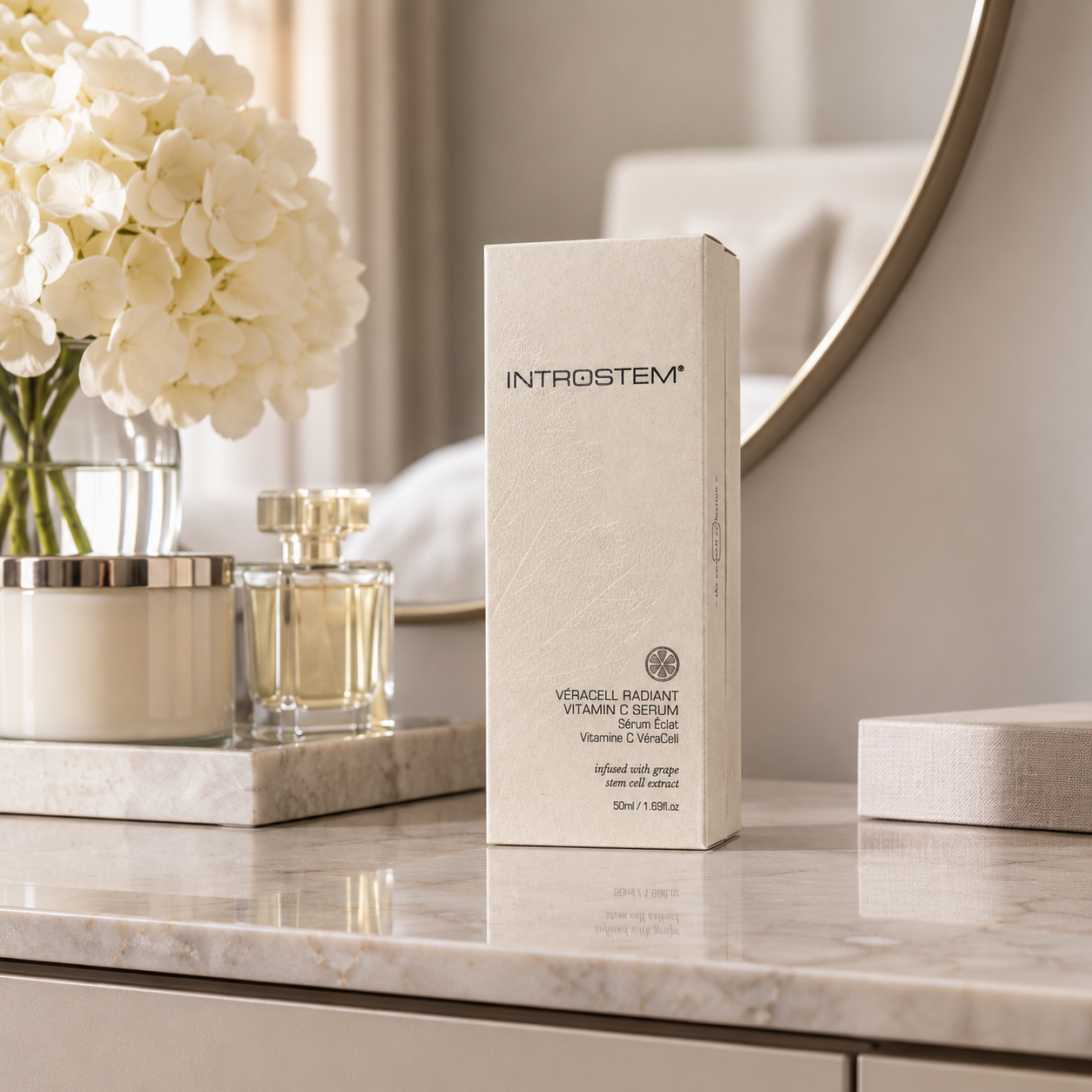
Vitamin C is the overachiever of the antioxidant world. Antioxidants help defend your complexion against free radicals, the unstable molecules created by UV rays, pollution, and everyday stress that can leave skin looking dull and tired.
A good vitamin C serum is meant to:
- Brighten a dull-looking complexion
- Even out the look of uneven tone and dark spots
- Smooth the feel of skin texture
- Add radiance for that lit-from-within look
That’s the job description, and it’s why vitamin C has a permanent spot on bathroom shelves everywhere.
One reality check: it’s not a sunscreen replacement. Think of SPF as your bodyguard and vitamin C as the cleanup crew. Introstem has a good read on pairing antioxidants with sunscreen if you want the details.
Why Some Vitamin C Serums Beat Others
Not all vitamin C serums are created equal. (Anyone who’s bought a bargain bottle that turned the color of weak tea knows this pain.) Here’s what separates the keepers from the shelf-warmers:
- The form of vitamin C. Pure ascorbic acid is the classic, but it’s famously unstable and can feel harsh on some skin. Derivatives are designed to be steadier.
- The supporting cast. Vitamin C works best with backup, like vitamin E and hydrating ingredients that keep skin comfortable.
- The texture. If it stings, tugs, or feels like glue, you’ll quit by week two. Consistency beats intensity.
- The percentage. A bigger number isn’t automatically a better serum. Formula balance matters more.
- Freshness. Vitamin C hates light and air, so stable formulas and smart packaging matter.
Meet the VéraCell Radiant Vitamin C Serum
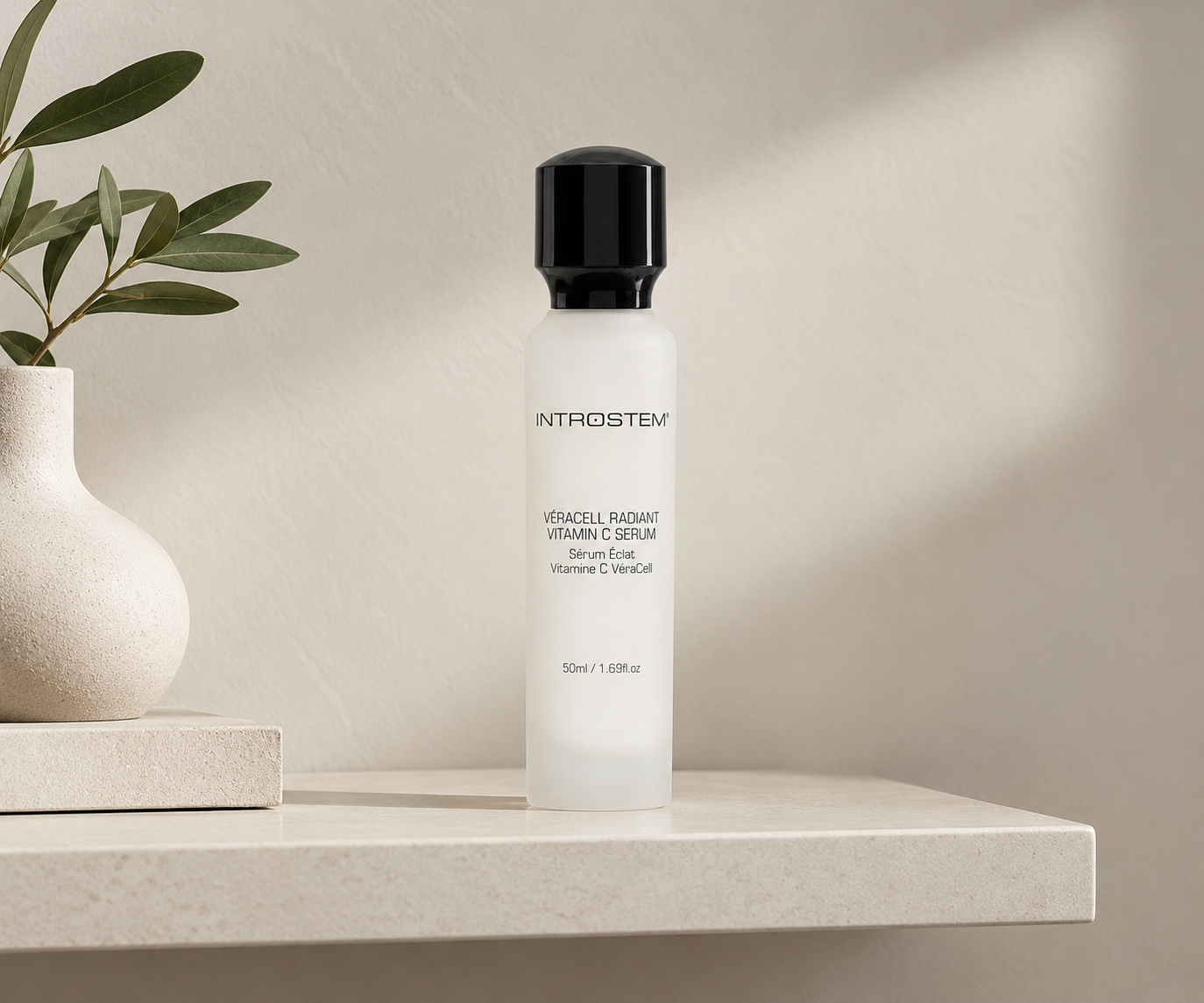
Now for the star of the show. Introstem’s new VéraCell Radiant Vitamin C Serum is a silky, lightweight formula designed to enhance your skin’s natural glow. You apply it to freshly cleansed skin on your face and décolletage, then massage it in until it’s fully absorbed.
Here are the ingredients that caught my eye:
- Tetrahexyldecyl Ascorbate (vitamin C). A stable, oil-soluble form of vitamin C. It’s a big reason this formula glides so silkily.
- Ascorbyl Palmitate (vitamin C). A second form of vitamin C. Two forms in one bottle make for a one-two complexion-brightening punch.
- Grape stem cell extract. Introstem’s signature ingredient, listed as Vitis Vinifera (Grape) Fruit Cell Extract. It’s the brand’s botanical hero and the thread running through every formula.
- Retinyl Palmitate (vitamin A). Included to support a smoother-feeling, more refined-looking complexion.
- Tocopheryl Acetate (vitamin E). The classic antioxidant sidekick that vitamin C loves to team up with.
- Organic jojoba, avocado, olive, and coconut oils. The comfort crew. They help skin feel soft, cushioned, and moisturized, which is why this serum doesn’t leave me feeling tight.
My Introstem Vitamin C Serum Review: Six Weeks In
Here’s the part you scrolled for. I’ve used this serum for six weeks, and I’ll say it plainly: I love it.
The first thing I noticed was the hydration. This serum feels drinkable. It glides on silky, sinks in without a sticky film, and leaves my skin looking plumper and fuller every single time, as if I’d slept eight hours and drunk all my water. (I had not.) It’s the opposite of that tight, squeaky feeling some vitamin C formulas leave behind.
Then there’s the feel. After each use, my skin feels firmer and smoother. Run your fingertips across it, and it’s soft, bouncy, and even, with a cushiony give that makes you keep touching your own face. No judgment if you do.
And the glow. Every application leaves a bright, radiant finish. It isn’t glittery or greasy. It’s more of a lit-from-within brightness that makes bare skin look intentional.
Then came week six. The glow stopped being a post-application bonus and started to look like my skin’s natural default. And the dark spots around my eyes? They look barely there. This serum is the only thing I changed in my routine, so I can confidently say it’s responsible for lightening the look of my discoloration.
Skin is personal, and results vary. But a serum this pleasant is easy to stay consistent with, and consistency is half the game.
Who Will Love Introstem’s Vitamin C Serum?
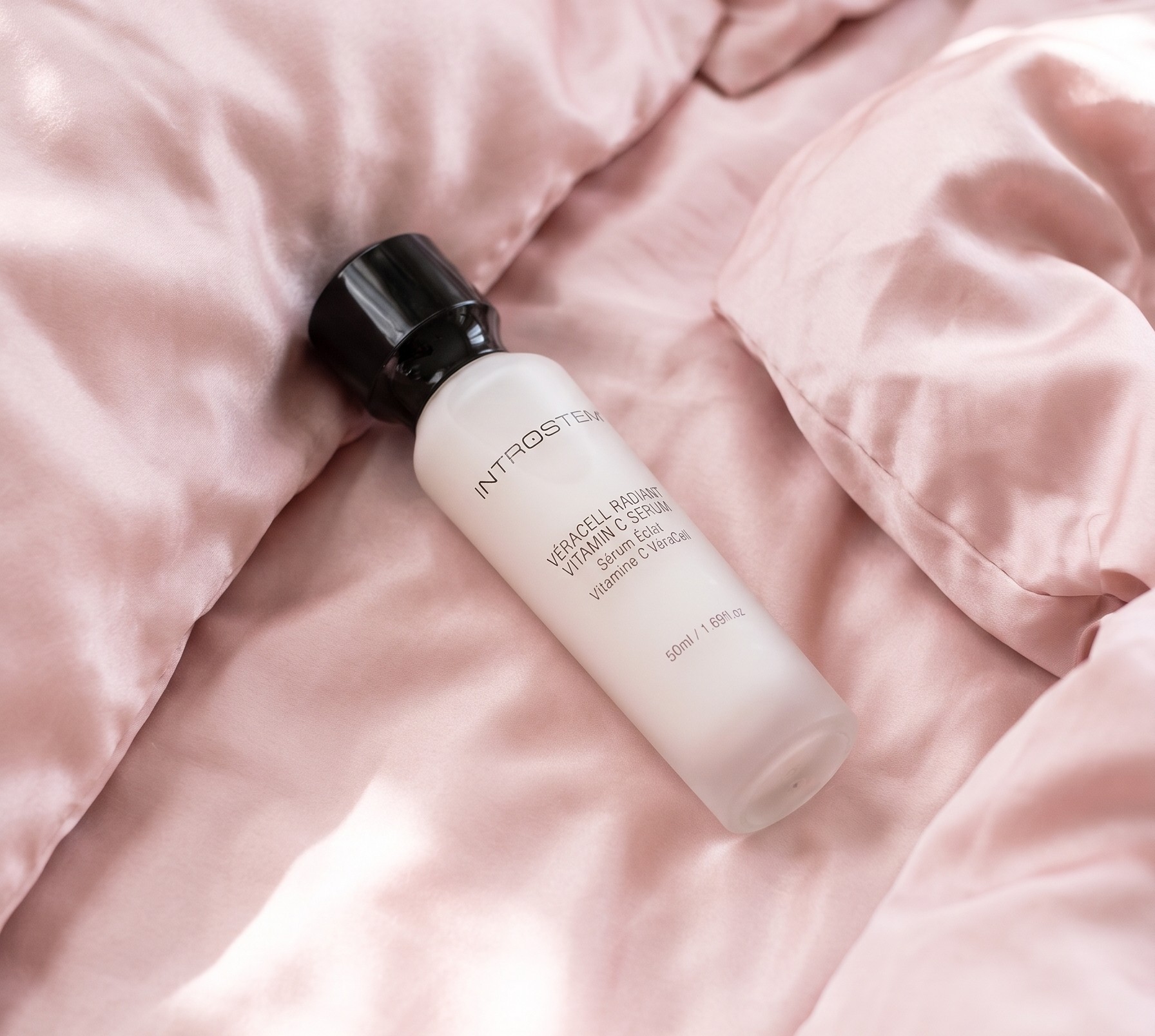
- Anyone who wants the appearance of brightness without the dry, tight aftermath
- Skin that looks dull and wants radiance back
- Texture lovers who want a silky, glide-on feel
- Anyone hoping for a more even-looking tone, including around the eyes
Skip it if fragrance-free is non-negotiable for you.
FAQ
Do I apply vitamin C serum before or after moisturizer?
Before. Go thinnest to thickest: cleanse, serum, moisturizer, and SPF in the morning.
Can I use it with retinol?
This serum already includes a vitamin A ingredient (retinyl palmitate), so you may not need to pile more on. If you want a separate retinol product, introduce it slowly, alternate nights, and patch test first.
Is a luxury vitamin C serum worth the price?
The list price was $500 at the time of writing, so it’s a splurge. You’re paying for two stable vitamin C forms, grape stem cell extract, and a texture that makes daily use a pleasure. Only you can call it, but results this visible, with the one-serum-changed-everything clarity I had, made it easy for me to say yes.
The Verdict on My Introstem Vitamin C Serum Review
That’s my Introstem vitamin C serum review in a nutshell: hydrating, silky, and radiance-boosting, with results I could see (and feel) by week six. If you’ve been hunting for a vitamin C that treats your skin like a guest instead of a science experiment, this one’s worth a look.
Ready to see it for yourself? Browse Introstem’s serum collection. Your future glow will thank you.



Leave A Comment